Please click on appropriate service category for more information:
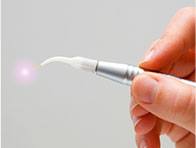
Laser cavity detection
Laser cavity removal
Implant tooth replacement
Micro-invasive dentistry
Cosmetic smile enhancement
Cosmetic fillings
Sedation dentistry
In-office whitening
Digital radiography
Comprehensive treatment planning

  Laser cavity detection - back to top
One of the most significant advancements in dental diagnosis has been the advent of the laser cavity detector. Traditionally, dentists have used a sharp instrument called an explorer to try and detect cavities on the biting surface of back teeth and on those flat surfaces of all teeth that are readily accessible. This method of cavity detection, aside from being uncomfortable, is about 50% effective in diagnosing decay. Laser cavity detection is easy, comfortable and is about 90% effective in detecting cavities. It is also possible to detect cavities at their earliest stages of development, allowing for early treatment and minimally invasive procedures.


  Laser cavity removal - back to top
Dental lasers are one of the true up and coming innovations in dentistry. Today‚s dental lasers are incredibly remarkable instruments. In most cases, these devices make it possible to remove decay without anesthesia. No more shot! As a bonus, no sound of the drill! This is an actual laser device that vaporizes decayed tooth structure. We use the Erbium:YAG laser, one of the most effective lasers on the market for decay removal. The future of dentistry is dental lasers.


  Implant tooth replacement - back to top
The standard of care in dentistry for tooth replacement is dental implants. Implants allow teeth to be replaced without grinding down teeth on either side of a missing tooth, which is what is required for traditional bridgework. This extremely conservative approach to tooth replacement has an incredible track record of success. Implant dentistry has been used in this country for over 25 years and the number of implants placed has increased every year since their introduction, making it one of the fastest growing treatments in dentistry. It is now possible to place an implant and a temporary tooth at the same visit, meaning that you never have to go without a tooth. We can even give a denture wearer a bridge the day after they receive their implants. Imagine, going from a loose lower denture to a firmly secured bridge in 2 visits!


  Micro-invasive dentistry - back to top
Micro-invasive dentistry is the detection and treatment of decay at its earliest inception. Utilizing laser cavity detection, cavities can be diagnosed at their earliest stages of development. Used in conjunction with the dental laser, cavities can be detected and treated before they develop into significant problems. Early detection means small fillings, which gives a tooth its greatest chance for being retained in the mouth for life. This treatment is usually performed painlessly, without anesthesia. This type of treatment is especially helpful when treating children, but adults can benefit too. Cosmetic tooth colored fillings are used to fill the cavities, making them virtually undetectable.


  Cosmetic Smile Enhancement- back to top
Cosmetic smile enhancement is the ability to alter and improve an individual‚s smile. There are several techniques which range from cosmetic whitening to all porcelain crowns. All porcelain crowns are the closest replacement dentistry has to offer to the esthetics of real teeth. Many individuals can receive porcelain veneers, sometimes as thin as a fingernail, in order to change a person‚s smile from a source of embarrassment to a source of pride. Studies have shown that people with beautiful smiles are more successful and more confident than those with embarrassing smiles.

  Cosmetic fillings - back to top
Historically, when a patient went in to have a filling, they received a silver or gold filling. Today, those metal fillings are a thing of the past. Silver and gold fillings discolor teeth or make them look dark, dramatically affecting a person‚s smile. Today, tooth colored fillings are the standard of care. The materials used today come in a wide variety of shades, so matching a patient‚s tooth color can be easily attained. We even have special shades that mimic the translucent nature of front teeth.


  Sedation dentistry - back to top
Sedation dentistry is the best thing that ever happened to the dental-phobe. We can comfortably treat the anxious patient in a way that allows them to have their treatment performed without knowing they‚re having it done. Utilizing a board certified anesthesiologist, you can be treated in just a few appointments. This is the safest method for sedation dentistry and allows the most fearful patient to finally get the treatment they need to keep their teeth.


  In-office whitening - back to top
In-office whitening is a great way to get the results you want in the shortest time possible. This treatment involves jump-starting the whitening process in the office using a special whitening gel and an enhancing light that quickly lightens the teeth. No anesthesia is required. This process is followed up with a take home system that is included in the treatment.


Digital radiography - back to top
Digital x-rays are quickly becoming the method of choice for dental professionals. This specialized method of taking x-rays is the safest technique used in dentistry today. The radiation exposure to the patient is 90% less than traditional x-rays. This level is so low, a lead apron is not even required. These x-rays can then be magnified so that the detection of even the smallest cavity is possible.


  Comprehensive treatment planning - back to top
Every patient that comes into our office receives a comprehensive treatment plan. This is usually presented in a private consultation session with one of our doctors. This is typically preceded by a comprehensive examination that typically includes: oral cancer screening, head and neck exam, TMJ screening, gum health screening, intra-oral pictures, intraoral charting and digital x-rays. This is the best method possible for detecting current and future dental health problems and for mapping out a plan to help you keep your teeth for life.